

Guida rapida: 30 secondi per leggere il vocabolario dell'estremo-minimale
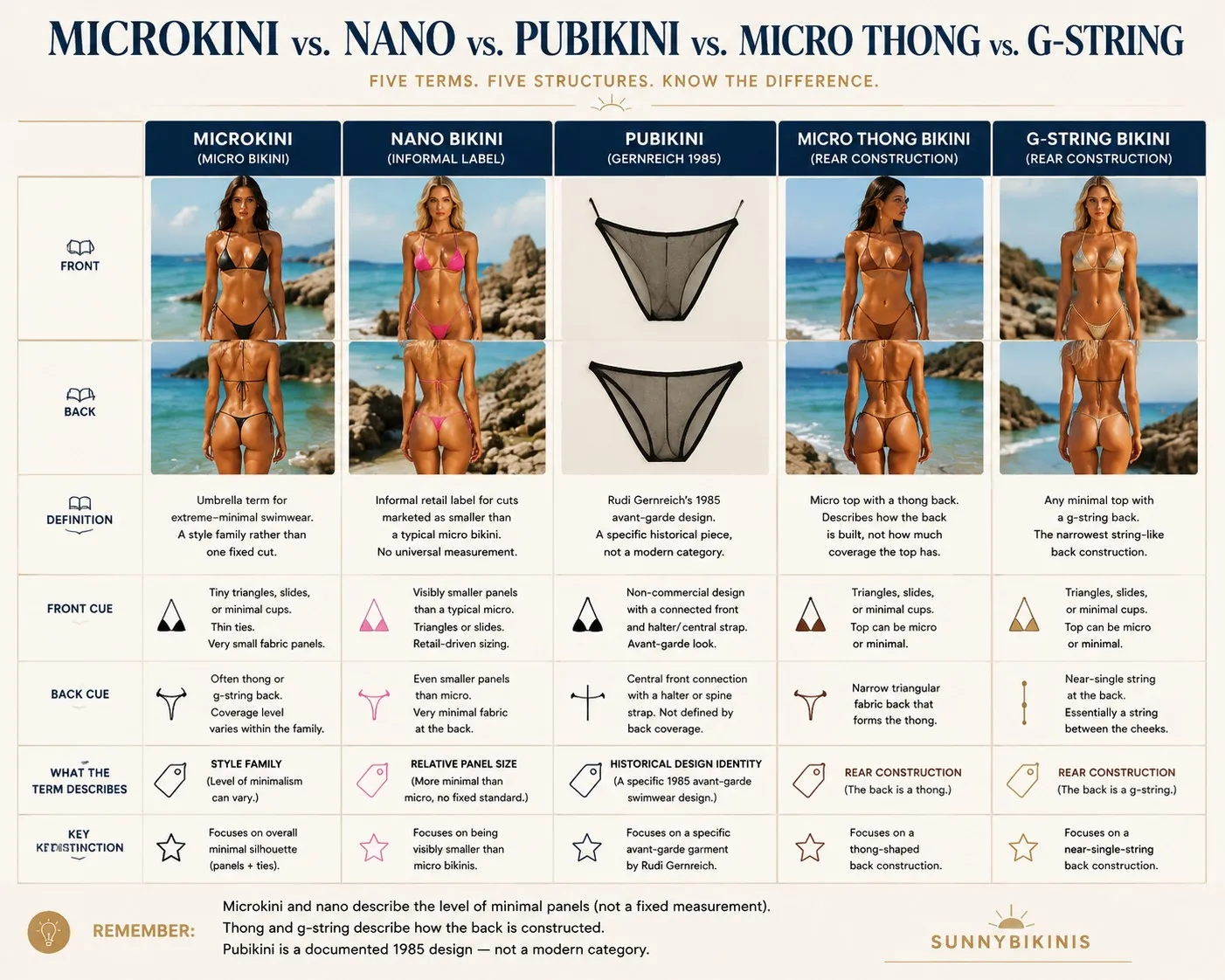
Cinque termini utili spiegano la maggior parte del vocabolario in questa guida, e ognuno risponde a una domanda diversa: microkini e micro bikini sono termini generici intercambiabili per costumi da bagno ultra-piccoli, nano bikini è un'etichetta di vendita più generica per tagli ancora più ridotti, pubikini indica uno specifico design del 1985, mentre micro tanga e g-string descrivono la costruzione della parte posteriore. Leggi prima la famiglia, poi abbina il livello alla tua occasione.
| Termine | Cosa significa | Verifica rapida |
|---|---|---|
| Microkini / Micro bikini | Termini generici per costumi da bagno ultra-minimali | "Quanto è piccolo?" |
| Nano bikini | Etichetta commerciale informale, solitamente venduto come più piccolo di un micro | "C'è una misura?" — solitamente no |
| Pubikini | Design d'avanguardia di Rudi Gernreich del 1985, non un livello di copertura | "È una categoria?" — no, è un design |
| Micro tanga / G-string | Costruzione posteriore: una parte che si restringe fino a un solo laccetto | "Com'è fatto dietro?" |
Scopri le collezioni ora: Microkini.
DECISIONE RAPIDA — Puoi fermarti qui: se ti servono solo il vocabolario e un consiglio per l'occasione, la tabella qui sopra è sufficiente. Continua a leggere per definizioni, storia, costruzione, controlli di vestibilità, occasioni d'uso, styling e le collezioni attuali.
Cos'è un Microkini?
La risposta subito: Un microkini, chiamato anche micro bikini, è un costume da bagno estremo-minimale che riduce i pannelli e le stringhe del bikini tradizionale per creare una copertura molto inferiore rispetto a un bikini standard. Il termine descrive una vasta famiglia di stili piuttosto che un taglio fisso: alcuni usano triangoli scorrevoli e laccetti, mentre altri si avvicinano a costruzioni nano, tanga o g-string.
Un microkini — la stessa famiglia di stili del micro bikini — sostituisce i pannelli standard con piccoli triangoli e sottili laccetti, riduce la parte posteriore a un tanga o g-string e talvolta omette del tutto i laccetti laterali. "Microkini, micro bikini, microbikini e micro kini sono comunemente usati per la stessa ampia famiglia di stili", quindi l'ortografia che vedi in un annuncio non indica un prodotto diverso. Ciò che rende uno stile un microkini non è una singola misura: è la combinazione di tessuto minimale e struttura ridotta, e la famiglia spazia dai set a due pezzi ai monokini interi e alle costruzioni a laccetti; all'interno dello spettro di copertura, molti design microkini si collocano al livello minimo o vicino ad esso. Uno slingshot o sling bikini è uno stile estremo correlato in cui un unico laccetto corre lungo il davanti o il dietro e svolge gran parte del lavoro di sostegno; la Guida allo Sling Bikini approfondisce tale struttura.
Estremo-minimale non significa fragile. Un microkini ben fatto, con tessuto elasticizzato di qualità e laccetti sicuri, può restare al suo posto, occupare pochissimo spazio e asciugarsi rapidamente — a patto che i laccetti, il posizionamento dei pannelli e il recupero del tessuto siano adatti all'attività. La praticità deriva dalla costruzione e dall'occasione, non dall'etichetta — la stessa frase si applica sia che tu stia scegliendo un due pezzi o un taglio micro intero.
Microkini vs. Nano Bikini vs. Pubikini: La famiglia dell'estremo-minimale
La risposta subito: Microkini e micro bikini sono generalmente termini generici intercambiabili; nano bikini descrive un taglio informale ancora più piccolo, mentre pubikini si riferisce a uno specifico design storico piuttosto che a una moderna categoria di copertura. Micro tanga e g-string non sono affatto livelli di copertura — descrivono la costruzione posteriore.
| Termine | Definizione | Copertura / forma | Look tipico |
|---|---|---|---|
| Microkini / Micro bikini | Termini generici per costumi da bagno estremo-minimali | Pannelli minimi, laccetti sottili, retro a tanga o g-string | Parte superiore a triangolo minuscolo o pannello con retro stretto |
| Nano bikini | Etichetta commerciale per tagli venduti come più piccoli di un tipico micro bikini | Pannelli ancora più piccoli di un micro | Triangoli minimi con i pannelli visibili più piccoli |
| Pubikini | Specifico design d'avanguardia di Rudi Gernreich del 1985 | Un design storico, non un livello di copertura commerciale | Design di slip d'avanguardia documentato al The Met |
| Micro tanga bikini | Parte superiore micro con retro a tanga | Il retro si restringe a un singolo laccetto | Top a triangolo micro più fondo a tanga |
| G-string bikini | Qualsiasi top minimale con retro a g-string | Singolo laccetto stretto sul retro | Top minimale più fondo a g-string |
- Microkini = la categoria ampia, non un taglio fisso.
- Nano bikini = un'etichetta di vendita che solitamente significa "più piccolo di un micro", senza una misura universale alla base.
- Pubikini = un design storico di Rudi Gernreich, non un termine di copertura moderno.
- Micro tanga e g-string = termini per la costruzione posteriore, non livelli di copertura.
La distinzione più utile non è classificare tutti e cinque i termini su una scala di copertura. Microkini descrive un'ampia famiglia di stili; nano bikini è un'etichetta di misura relativa informale; Pubikini identifica uno specifico design storico; e micro tanga e G-string descrivono la costruzione posteriore. Quando vuoi confrontare i livelli di copertura attraverso l'intero spettro minimale — mini, micro, copertura nulla — la Guida al Bikini senza copertura mappa tale scelta.
Nano Bikini: Un passo informale oltre il micro
Un nano bikini è un'etichetta commerciale informale per tagli venduti come più piccoli di un tipico micro bikini. Non esiste una misura industriale universale che separi il nano dal micro. Alcune guide di vendita del 2025 utilizzano dimensioni dei pannelli come 5–7 cm come punti di riferimento propri, ma quelle cifre dovrebbero essere lette come esempi specifici del venditore piuttosto che come una definizione. Se vedi un annuncio "nano", leggi le dimensioni del pannello e le note sulla vestibilità in quella pagina invece di presumere uno standard — l'etichetta ti indica l'intento del venditore, non una specifica di settore.
Pubikini: Uno specifico design d'avanguardia del 1985
Un pubikini non è semplicemente un altro termine per un bikini ultra-piccolo. Si riferisce allo specifico design d'avanguardia di Rudi Gernreich del 1985, documentato nella collezione del Costume Institute del Metropolitan Museum of Art. Il Met registra l'opera come "Pubikini", datata 1985 e realizzata in fibra sintetica e plastica. Gernreich costruì la sua carriera mettendo in discussione il modo in cui l'abbigliamento incornicia il corpo, dal monokini al tanga, e il pubikini si colloca alla fine di quella serie di esperimenti. Oggi il termine viene talvolta usato impropriamente negli annunci, ma il design in sé è un pezzo da museo — e in questa guida, pubikini si riferisce quindi a uno specifico design storico piuttosto che a una moderna categoria di copertura. L'immagine di accompagnamento è una ricostruzione editoriale basata sul capo documentato, non una fotografia dell'oggetto del Met.
Micro Tanga & G-String: Costruzione posteriore, non livelli di copertura
Un micro tanga bikini abbina una parte superiore minimale a un retro che si restringe in un singolo laccetto; un g-string bikini fa lo stesso riducendo il retro a una costruzione a filo molto stretta. Questi termini descrivono come è costruito il retro, motivo per cui si combinano con qualsiasi dimensione di top. Il vantaggio pratico è un segno dell'abbronzatura che rimane quasi invisibile. Per l'enciclopedia completa sui fondi e le linee delle gambe, la Bibbia dei fondi e della copertura mappa ogni linea di vita e taglio di gamba.
Una breve storia del microkini
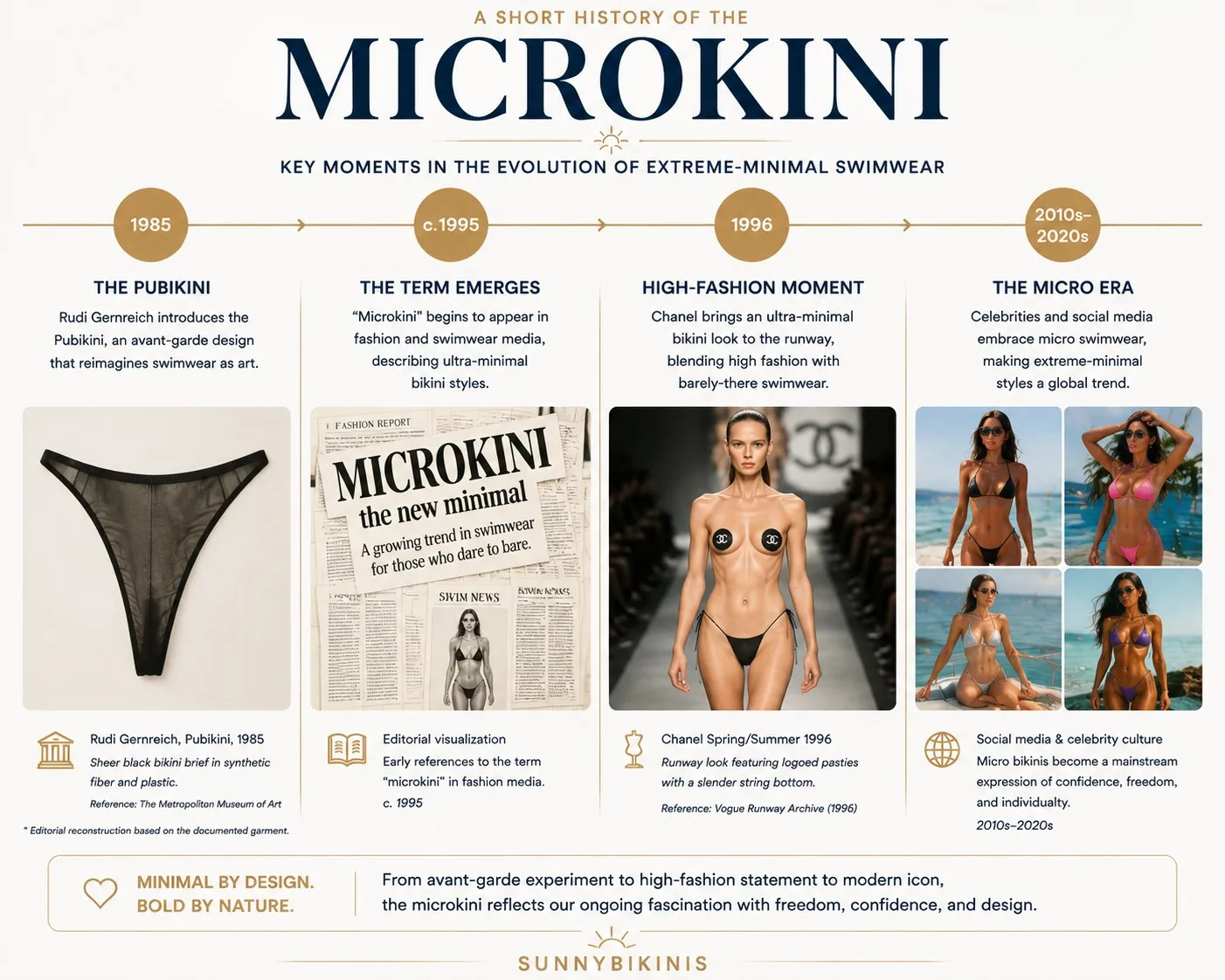
Il microkini non è apparso come un capo standardizzato in un momento preciso. La sua storia è meglio leggibile come una sequenza: il Pubikini del 1985 documentato di Rudi Gernreich appartiene al lignaggio d'avanguardia; il termine microkini viene comunemente fatto risalire alla metà degli anni '90; Chanel ha prodotto un notevole momento estremo-minimale in passerella nel 1996; e la cultura delle celebrità e dei social media ha successivamente portato i micro costumi da bagno a una visibilità molto più ampia.
Il nome microkini segue un modello di denominazione dei costumi da bagno familiare: -kini è diventato un suffisso flessibile per le varianti del bikini, mentre micro- segnala la riduzione. I riferimenti secondari collocano comunemente l'emergere del termine intorno al 1995, quindi è meglio trattarlo come uno sviluppo del vocabolario della metà degli anni '90 che come un'invenzione datata con precisione.
Un importante predecessore dovrebbe essere tenuto distinto da quella terminologia. Il Pubikini di Rudi Gernreich è uno specifico design d'avanguardia documentato dal Costume Institute del Metropolitan Museum of Art. Il museo registra l'opera come Pubikini, datata 1985, di Gernreich e realizzata in fibra sintetica e plastica. Appartiene alla storia dei costumi da bagno estremo-minimali, ma il pubikini non dovrebbe essere trattato come un altro nome generico per un moderno micro bikini. The Metropolitan Museum of Art
Il 1996 segna un diverso tipo di momento: la visibilità nell'alta moda. L'archivio della sfilata Chanel Primavera 1996 di Vogue descrive Amber Valletta che indossa un "top" bikini composto da copricapezzoli logati tenuti da un sottile laccetto. Ciò non rende Chanel l'inventore del microkini; fornisce però un esempio ben documentato di linguaggio dei costumi da bagno estremo-minimali che appare su una passerella importante. Vogue
Negli anni 2010 e 2020, l'abbigliamento da spiaggia delle celebrità e i social media hanno dato alle silhouette micro una visibilità molto più ampia. La copertura della moda ha sempre più raggruppato look a pannelli minuscoli, illusori ed estremo-minimali sotto descrittori provocatori come "naked bikini", sebbene quella frase descriva un effetto visivo piuttosto che una categoria di costumi da bagno standardizzata.
Perché scegliere l'estremo: L'arte del taglio audace
Le persone scelgono i microkini per tre ragioni che non hanno nulla a che fare con "quanto ti puoi permettere di mostrare": meno segni dell'abbronzatura, libertà senza peso e la moda della sottrazione — un modo di vestire che si legge come un editing piuttosto che come un completo.
Il taglio audace & minimalista è un'idea estetica: rimuovere fino a quando rimangono solo le linee essenziali, nel modo in cui un editore taglia una storia per la sua versione più incisiva. Su un microkini, ciò significa lasciare che sia la pelle a dare sostanza al look, con il costume che funge da sottile linea grafica contro il corpo. Praticamente, meno tessuto significa segni dell'abbronzatura minimi — i laccetti stretti possono lasciare segni più piccoli e meno visibili — e un costume che non pesa quasi nulla in acqua o in valigia. Alcune persone scelgono l'estremo anche perché corrisponde al modo in cui vogliono essere viste: audaci, dirette, in controllo dell'affermazione.
È anche qui che l'estetica del cosiddetto "naked bikini" si sovrappone al microkini. La frase non è una categoria tecnica; descrive l'impressione visiva creata quando pannelli minuscoli, colori simili alla pelle, materiali trasparenti o laccetti appena visibili fanno sì che il costume da bagno receda e il corpo diventi l'elemento visivo dominante. Se questo look è l'obiettivo, la collezione Naked Bikinis raccoglie i tagli più leggeri in un unico posto.
Questa è una preferenza, non una promessa. Non esiste una versione di questa guida che dica "indossa un microkini e ti sentirai sicura di te" — la vestibilità, l'occasione e il comfort decidono quello. L'estetica funziona su una scala espressiva, non su una scala di tipo corporeo, motivo per cui il resto di questa guida parla di occasioni e costruzione piuttosto che di etichette per il corpo.
L'anatomia di un costume estremo-minimale
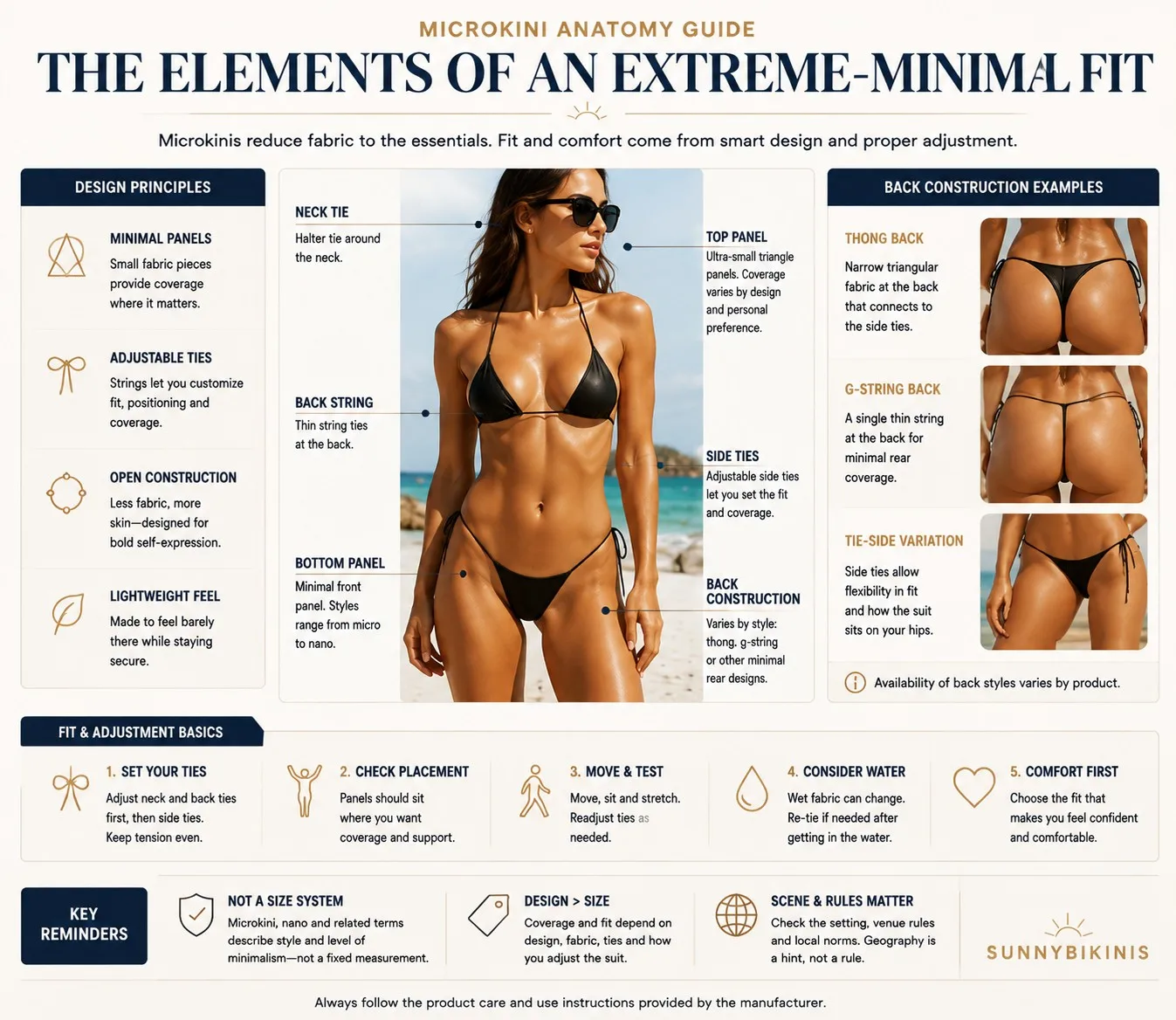
Un microkini ben adattato può rimanere sicuro grazie alla tensione della vestibilità e alla costruzione piuttosto che al volume del tessuto: i piccoli pannelli decidono la copertura, i triangoli scorrevoli regolano il posizionamento, i laccetti sottili controllano la tensione e il taglio posteriore decide la linea del retro e i segni dell'abbronzatura.
| Elemento | Cosa modifica |
|---|---|
| Piccoli pannelli | Copertura — quanto è coperto sopra e sotto |
| Triangoli scorrevoli | Posizionamento regolabile — dove si trova il pannello sul corpo |
| Laccetti sottili | Tensione e posizionamento — quanto aderente si sostiene tutto |
| Tanga / Retro G-string | Copertura posteriore e segni dell'abbronzatura |
La struttura è semplice, ed è proprio questo il punto: ogni elemento svolge un lavoro visibile. I piccoli pannelli determinano quanta copertura frontale offre il design. I triangoli scorrevoli — pannelli infilati sul laccetto in modo da poterli spostare — regolano dove si posiziona il pannello sul corpo invece di accettare una posizione fissa. I laccetti sottili aiutano a impostare la tensione e il posizionamento; dovrebbero essere regolati in modo sicuro senza sentirsi scomodamente stretti. Le costruzioni a tanga e G-string determinano la linea posteriore e la copertura posteriore.
Costruzione rara: Alcune varianti di microkini storiche o originali utilizzano adesivo o filo metallico al posto dei tradizionali laccetti laterali. Queste sono eccezioni, non la norma — trattale come articoli speciali e segui le istruzioni del produttore.
Come indossare un Microkini: I tre controlli di vestibilità estrema
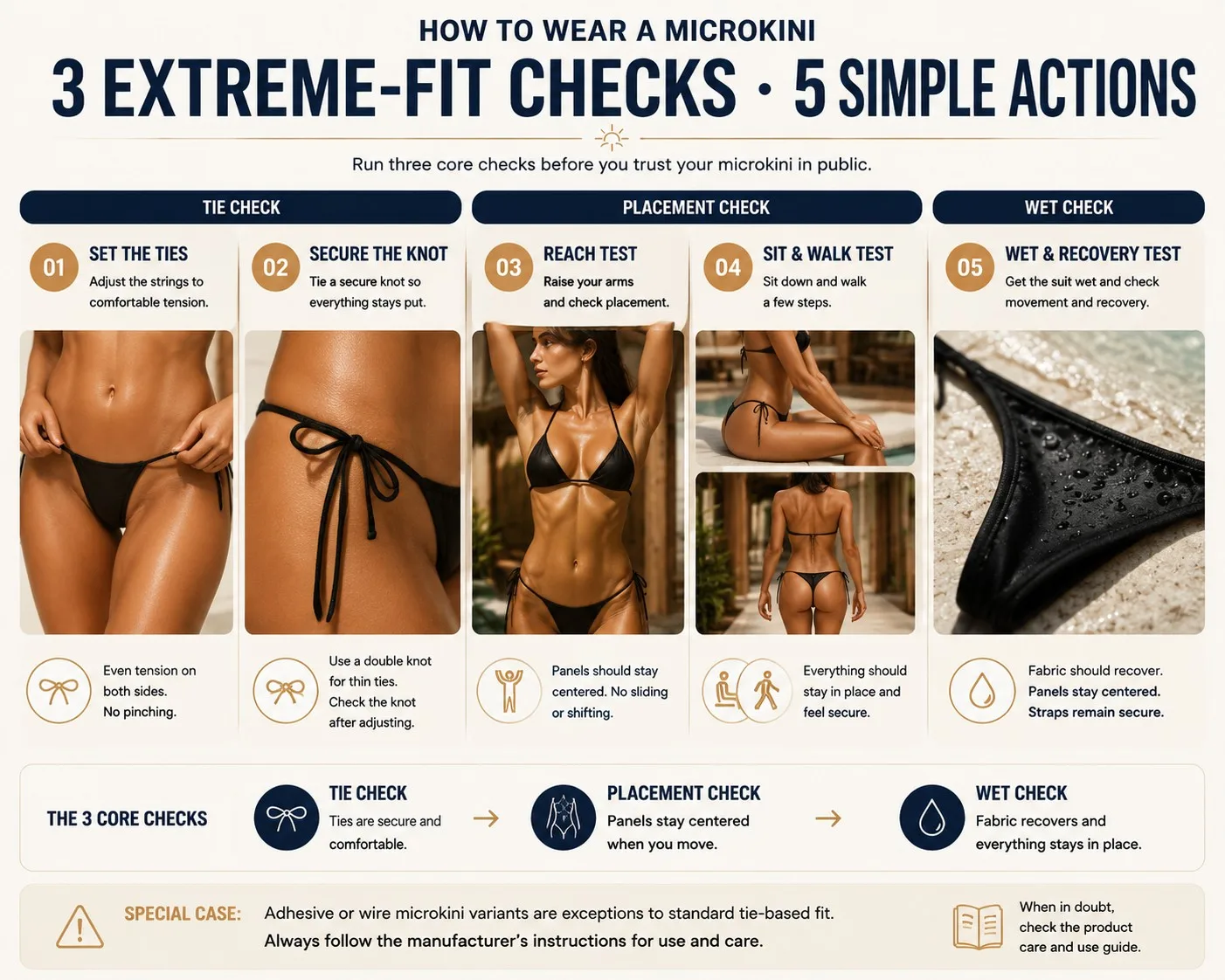
Effettua tre controlli prima di sfoggiare un microkini in pubblico: il controllo dei laccetti (nodo sicuro, tensione confortevole), il controllo del posizionamento (i pannelli rimangono centrati quando ti muovi) e il controllo da bagnato (il tessuto recupera dopo l'acqua). Le varianti con adesivo o filo metallico sono un caso a parte — segui le loro istruzioni.
- Controllo dei laccetti — annoda ogni laccetto in modo sicuro e imposta la tensione in modo che tenga senza stringere. Un doppio nodo sui laccetti sottili è un'assicurazione economica.
- Controllo del posizionamento — raggiungi, siediti e cammina per qualche passo. I pannelli dovrebbero rimanere centrati; se un triangolo scivola fuori centro, la lunghezza del laccetto o la dimensione del pannello non è quella giusta per te.
- Controllo da bagnato — bagna il costume, quindi controlla che il tessuto recuperi e che nulla si sposti. Il tessuto elasticizzato e di recupero è ciò che mantiene un costume minuscolo al suo posto dopo l'acqua.
Pensali come tre controlli fondamentali all'interno di una routine di vestibilità in cinque passaggi: regola i laccetti, controlla il posizionamento, muoviti e prova, controlla il costume dopo l'acqua, quindi fai un'ultima regolazione per il comfort.
Gli annunci "taglia unica" in questa categoria si affidano all'elasticità e alla regolabilità dei laccetti: confronta le tue misure con la tabella delle taglie e aspettati di regolare i laccetti. E ricorda l'eccezione di cui sopra — le varianti adesive o con filo metallico necessitano di istruzioni specifiche del produttore, perché nessuna regola generale di vestibilità le copre.
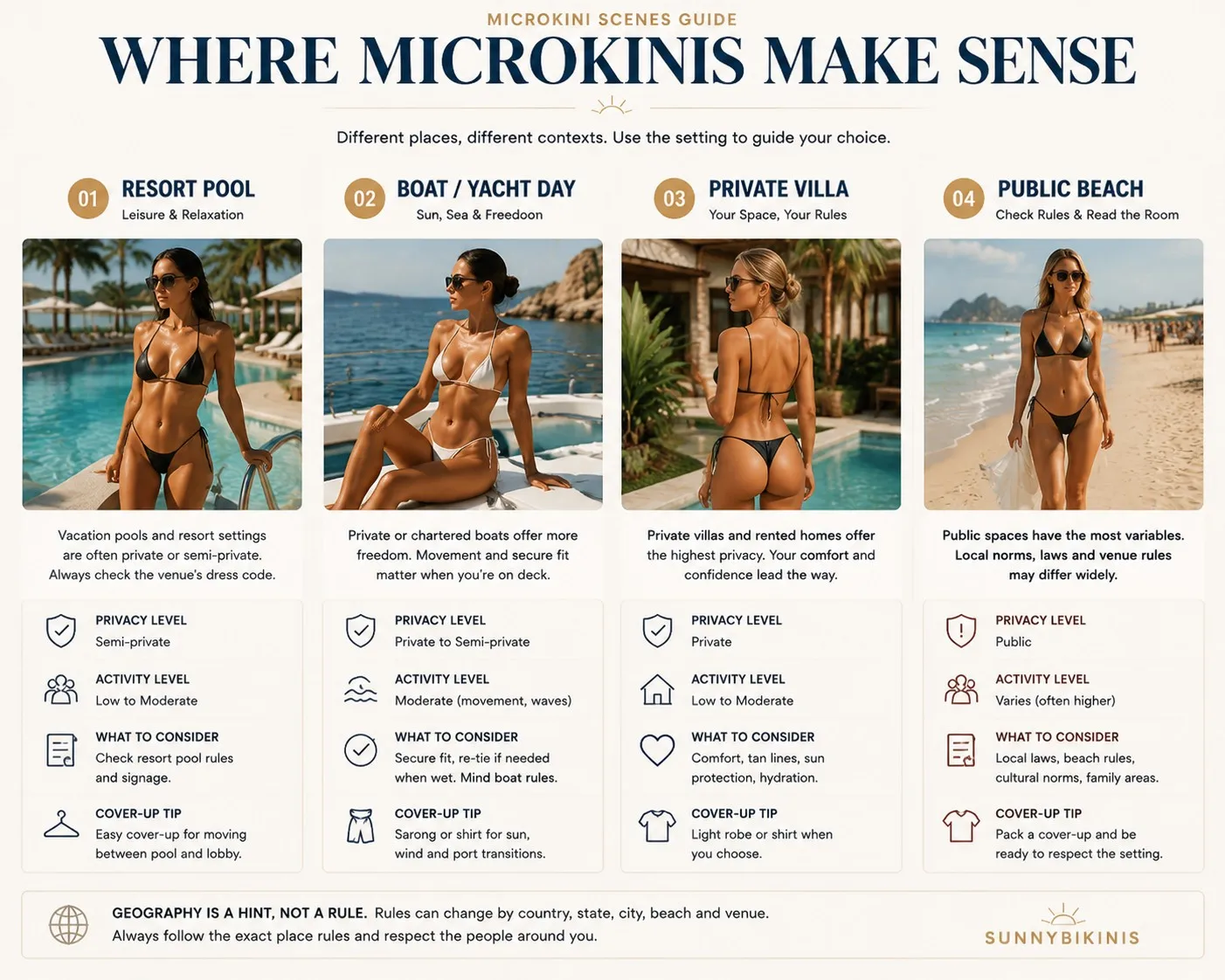
Dove indossarlo: Occasioni & Etichetta in spiaggia
La risposta subito: Abbina il livello all'occasione: i microkini brillano in piscine di resort, giornate in barca e ville private, mentre su spiagge pubbliche o luoghi con contesti misti, un copricostume o un taglio meno minimale rendono le transizioni più facili. La legalità è una questione separata — le regole sui costumi da bagno pubblici variano da luogo a luogo, quindi controlla la sede esatta.
Lo stesso microkini si legge diversamente a seconda dell'occasione. Piscine di resort, giornate in barca e ville private possono funzionare per i costumi da bagno estremo-minimali, ma ognuno comporta un diverso mix di attività, privacy e aspettative del luogo. Una piscina di un resort in Florida, una giornata su uno yacht in California o una villa privata alle Hawaii possono aiutarti a visualizzare l'ambiente, ma la geografia da sola non ti dice cosa sia appropriato. Verifica le aspettative del luogo o dell'ospite, considera quanto movimento comporta la giornata e porta un copricostume quando potresti spostarti tra ambienti diversi — per una spiaggia pubblica o un luogo con contesti misti, un copricostume rende le transizioni più facili dandoti flessibilità se le regole locali o l'ambiente richiedono una maggiore copertura.
Sul lato legale, mantienilo semplice: le regole sui costumi da bagno pubblici possono variare per paese, stato, comune, spiaggia, resort e locale. Controlla le regole per il luogo esatto che intendi visitare. Quella frase è l'intera sezione legale di proposito — non esiste una risposta onesta a livello statale, e un luogo (una piscina di un hotel, una spiaggia di un resort, un parco pubblico) spesso stabilisce la propria aspettativa.
Una nota pratica: un microkini può essere indossato in acqua, ma i livelli estremo-minimali sono pensati meglio come costumi da bagno per l'abbronzatura e il relax. Per i giri in piscina o attività acquatiche vigorose, la Guida al Bikini Extreme High-Leg copre opzioni a gamba alta sicure che mantengono la linea senza l'esposizione.
Styling dell'edit audace: Tre modi per fare la transizione oltre l'acqua
Uno strato è sufficiente per spostare un costume estremo-minimale dall'acqua al tavolo: avvolgere, indossare o strato completo — sarong, camicia di lino, o gonna all'uncinetto e pantaloni a gamba larga.
La domanda di styling qui è ristretta: come fai a far passare un costume da bagno estremo-minimale oltre l'acqua? Tre sistemi lo coprono:
- Avvolgere — un sarong legato al fianco mantiene la silhouette aggiungendo uno strato per la passeggiata dall'acqua alla sedia a sdraio.
- Indossare — una camicia di lino aperta sopra il costume si legge come la stessa estetica "edit" con maggiore copertura, e si asciuga velocemente.
- Strato completo — una gonna all'uncinetto o pantaloni a gamba larga trasformano il costume in un outfit da sera senza che sia necessario cambiare il pezzo forte.
Il costume rimane piatto sotto strati leggeri, quindi è lo strato superiore a definire lo stile, mentre il taglio minimalista continua a funzionare sotto. Con meno tessuto, una base neutra o un colore deciso mantengono il look pulito: è la fantasia a comunicare quando c'è spazio per farlo. E poiché il tutto si ripiega in poco spazio, un costume estremamente minimale è l'elemento più leggero in una borsa da viaggio, il che lo rende una scelta facile per i viaggi in cui ogni grammo conta.
Prove dal Prodotto: Cosa dicono le schede Sunnybikinis
L'attuale micro linea di Sunnybikinis varia da $19,98 a $39,99, passando da un set micro velato a un modello premium con catena di perle; tutte le cifre si riferiscono alle pagine in tempo reale al 22 agosto 2026. Prezzi, taglie e disponibilità possono variare; controlla sempre la pagina del prodotto per i dettagli aggiornati. La tabella di selezione rapida con i link diretti si trova nella sezione successiva.

| Stile | Cosa dice la scheda |
|---|---|
| Extreme Micro Slingshot Monokini | Taglio a fionda intero, retro a perizoma, misto poliestere-cotone elasticizzato, taglia unica XS–L: progettato per una copertura minima e uno stile audace piuttosto che per il nuoto agonistico |
| Extreme Micro Striped Monokini | Intero a righe in rete velata, retro a perizoma, spalline sottili regolabili, nylon-spandex, senza imbottitura o fodera: ideale per abbronzarsi, rilassarsi o per eventi privati |
| Sheer Mesh Micro Bikini Set | Due pezzi in rete trasparente con parte inferiore a perizoma: il pannello velato è l'elemento distintivo; si consigliano strati trasparenti sopra |
| Sexy Extreme Mini Micro Thong Diamond Bikini | Due pezzi con parte inferiore a perizoma estremo e dettagli con diamanti: l'estremità più elegante dello spettro micro |
| Women's Sexy Micro Mini G-String Bikini Set | Due pezzi con top a micro triangoli e parte inferiore a perizoma: la classica silhouette micro in versione set |
| Sunnybikinis Halter Pearl Chain Micro Bikini Set | Set micro all'americana con catena metallica e accenti di perle finte: l'estremità premium della linea minimal |
Tre proposte mostrano la varietà della linea: il Women's Sexy Micro Mini G-String Bikini Set ($21,55) rappresenta la classica silhouette micro in versione set; il Sheer Mesh Micro Bikini Set ($19,99) rappresenta la fascia sperimentale velata; e il Sunnybikinis Halter Pearl Chain Micro Bikini Set ($39,99) rappresenta la fascia premium, dove vestibilità, fodera e sicurezza della catena sono fondamentali.
Le schede confermano la famiglia: set micro, interi micro e una versione premium con catena di perle da $19,98 a $39,99; inoltre la linea include stili in rete velata e modelli a triangolo scorrevole con strass, in linea con la struttura descritta in questa guida. Per la gamma completa, esplora la collezione Extreme Bikinis.
Scelte estreme minimali consigliate
La tabella sottostante abbina a colpo d'occhio il vocabolario alle schede attuali: prezzo e valutazione nella tabella, link diretti subito dopo, ciascuno verificato sulla pagina del prodotto in tempo reale.
| Livello famiglia | Tipo | Stile | Prezzo | Valutazione |
|---|---|---|---|---|
| Intero Microkini | Taglio a fionda, retro a perizoma | Extreme Micro Slingshot Monokini | $21,99 | Nuovo |
| Intero Microkini | Rete velata a righe, retro a perizoma | Extreme Micro Striped Monokini | $19,98 | 5.0 (2) |
| Set micro bikini | Rete velata, parte inferiore a perizoma | Sheer Mesh Micro Bikini Set | $19,99 | Nuovo |
| Set micro perizoma | Dettagli con diamanti | Sexy Extreme Mini Micro Thong Diamond Bikini | $30,99 | Nuovo |
| Set micro perizoma | Top a micro triangoli | Women's Sexy Micro Mini G-String Bikini Set | $21,55 | Nuovo |
| Micro halter premium | Accento catena di perle | Sunnybikinis Halter Pearl Chain Micro Bikini Set | $39,99 | Nuovo |
Extreme Micro Slingshot Monokini
Extreme Micro Striped Monokini One-Piece Swimsuit
Sheer Mesh Micro Bikini Set – Transparent G-String
Sexy Extreme Mini Micro Thong Diamond Bikini
Women's Sexy Micro Mini G-String Bikini Set
Sunnybikinis Halter Pearl Chain Micro Bikini Set
Scegli il modello adatto al tuo livello — set micro per il minimal quotidiano, intero velato per il massimo dell'impatto, catena di perle per la fascia premium — quindi verifica la vestibilità sulla pagina del prodotto.
Fonti
- The Metropolitan Museum of Art — Pubikini, Rudi Gernreich, 1985 (documento d'archivio primario per il pubikini; consultato ad agosto 2026): Pubikini — The Met
- Vogue Runway — Chanel Primavera 1996 Prêt-à-porter (pagina della collezione d'archivio che documenta il bikini con logo; riferimento datato): Chanel Primavera 1996 — Vogue Runway
- Wikipedia — Varianti del bikini (terminologia microkini e riferimento all'uso a metà anni '90; consultato ad agosto 2026): Varianti del bikini — Wikipedia
- Simple English Wikipedia — Microkini (definizione in linguaggio semplice; consultato ad agosto 2026): Microkini — Simple English Wikipedia
- Wiktionary — pubikini (voce di glossario; consultato ad agosto 2026): pubikini — Wiktionary
- Audi Swim — Taking Over 2025: What is a Nano Bikini (riferimento commerciale datato per le cifre dei pannelli da 5–7 cm; aprile 2025): Cos'è un Nano Bikini — Audi Swim
- SI Swimsuit — What Is a Micro Bikini? (riferimento di tendenza datato per l'adozione da parte delle celebrità; giugno 2025): Cos'è un Micro Bikini — SI Swimsuit
Conclusione
Il microkini non è una misura, è un vocabolario e un'estetica. Impara prima la famiglia: microkini e micro bikini come termini generali, nano come etichetta commerciale più generica, pubikini come il design di Gernreich del 1985, e perizoma (thong/g-string) come costruzione posteriore. Poi lascia che sia la situazione a scegliere il livello, verifica i tre controlli di vestibilità prima di ordinare e controlla la composizione del tessuto, il recupero elastico, la fodera e la regolabilità sulla pagina del prodotto: le note di vestibilità specifiche del prodotto sono il riferimento finale. Il costume estremamente minimale giusto è quello che rimane al suo posto, si adatta al contesto in cui ti trovi e appare come una scelta studiata, non come un incidente.


Leave a comment